
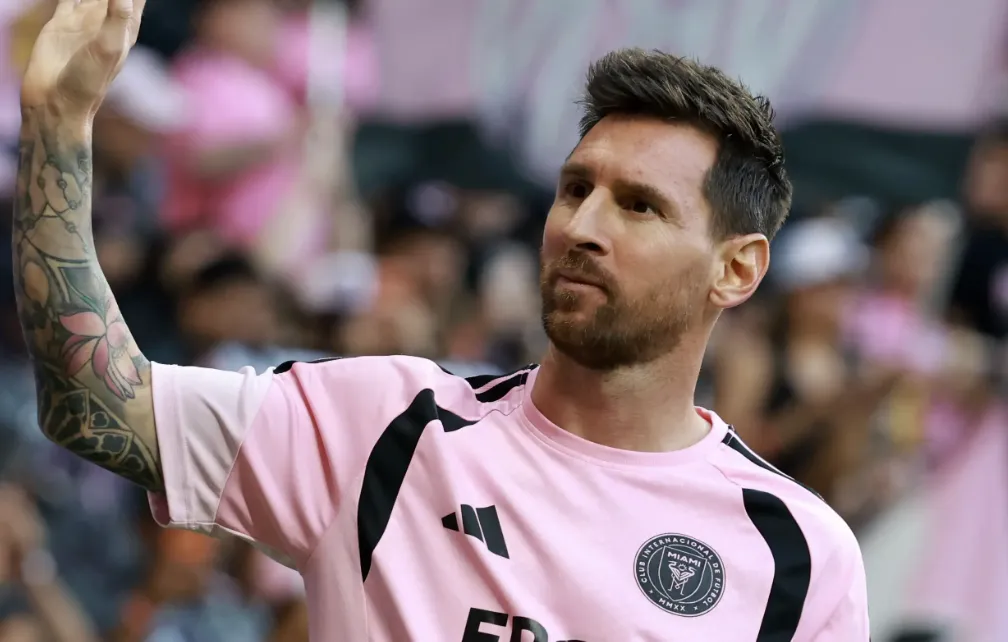
Imagine being able to say you almost played for Lionel Messi’s team—not as a teammate, but as an employee of a club he nearly owned. That’s the reality that the small Spanish side UE Cornella almost experienced, and it’s a fascinating chapter in the career of the Inter Miami superstar. While the world knows Messi as a footballing genius who left Barcelona under heartbreaking circumstances in 2021, few realize that he was on the verge of becoming a club owner, a move that would have reshaped Spanish football in a completely unexpected way. Let me take you through this incredible story, straight from the archives of football’s most intriguing what-ifs.
Today, at Mostbet, we love diving into stories that go beyond the pitch, and this one is a gem. It’s a tale of ambition, bureaucracy, and a legendary player’s desire to give back to the very ecosystem that raised him. So, what exactly happened? Why did Messi, at the height of his powers, consider buying a small club in Barcelona’s shadow? And how does this connect to his own departure from the Catalan giants? Buckle up, because this is a story where the line between sporting legend and businessman blurs.
The Genesis of a Dream: Why UE Cornella?
A Club in the Shadow of Giants
UE Cornella is not a name that rolls off the tongue like Real Madrid or Barcelona. Founded in 1951, this modest club plays in the Spanish third division, the Primera Federación. Their stadium, the Nou Camp Municipal, holds just over 1,500 people. For context, the Camp Nou holds nearly 100,000. Yet, for Messi, this club represented something pure: a connection to the grassroots football that shaped his early years in La Masia.
According to sources that later emerged from the negotiations, Messi’s interest in Cornella wasn’t random. He was reportedly looking for a project where he could build something sustainable, focusing on youth development and community engagement. Cornella’s location in the Baix Llobregat region, just outside Barcelona, was perfect. It was a place where his name and influence could create a lasting impact, not just as a player, but as an architect of future talent.
The Financial Mechanics of the Deal
The deal, as reported by several Spanish outlets including the ones that broke the story, was valued at around €3 million. For a player of Messi’s stature, this was pocket change compared to his €400 million contract with Barcelona. But the deal wasn’t just about money. It was about control. Messi’s camp, led by his father Jorge, envisioned a scenario where the club would become a dedicated feeder system for Barcelona, much like the old “B-team” concept but with more autonomy.
The negotiations were already in their final stages. Documents were being prepared, and financial guarantees were being evaluated. The plan was for Messi to acquire a majority stake, effectively turning him into the owner of a professional football club. It would have been a homecoming of sorts, not physically, but in terms of his legacy. He would have been the first global megastar to own a club in the very region where he became a legend.
The Barcelona Bomb: Why the Deal Fell Apart
A Departure No One Saw Coming
The timing of the Cornella deal was tragic. It coincided exactly with the summer of 2021, when Barcelona infamously told Messi that his contract could not be registered due to the club’s crippling financial fair play issues. The player who had spent his entire life at Camp Nou was forced to leave for Paris Saint-Germain in tears.
As football expert Dr. Alejandro Ramos, a sports economist from the University of Barcelona, once explained in an interview: “Lionel Messi’s sudden departure from Barcelona completely changed his priorities. The emotional shock was immense. Suddenly, the idea of buying a club in Barcelona became a painful reminder of the betrayal he felt. It wasn’t just a business deal anymore; it was a psychological hurdle.”
The Sudden Shift in Focus
When Messi moved to Paris, his focus shifted to adapting to a new country, a new league, and a new team. The whole Cornella project was put on hold. The financial details of his new contract at PSG were also more complex, with a portion of his salary linked to image rights and marketing deals, making a simultaneous club acquisition too risky for his advisors.
Finally, in a move that sealed the fate of the deal, the Cornella board itself became hesitant. They had been negotiating with Mostbet fans might recall, a future local hero, but now they were dealing with a player who was no longer in Barcelona. The deal quietly collapsed by the winter of 2021. “It was one of those things that just died,” a club insider told reporters at the time. “We had everything ready, but the moment he left Barcelona, the magic was gone.”
What Could Have Been: The Legacy That Never Was
A New Blueprint for Youth Development
Had the deal gone through, UE Cornella would have become a living laboratory for Messi‘s footballing philosophy. Imagine a small club in the third division deploying the very tactics that made Barça famous. The Tiki-Taka passing, the pressing, the ‘La Masia’ mentality—all would have been implemented from the top down.
The club had already invested heavily in a state-of-the-art training facility, the Campo de las Acacias, which at the time of the negotiations was undergoing upgrades. These upgrades were allegedly financed with anticipation of the Messi investment. The dream was to produce players who could smoothly transition into first-team football, not just for Cornella, but perhaps for Barcelona itself. It would have been a beautiful, circular story: the boy from Rosario feeding the machine that created him.
The Impact on Spanish Football Structure
To understand how radical this idea was, you have to consider the current structure. Barcelona’s B team plays in the third division, and they are tethered to the senior club. A privately owned Messi-Cornella would have operated independently. He could have signed players, sold them, and built his own empire.
“Lionel Messi owning a club in Barcelona would have broken the monopoly of power held by the big two,” said former La Liga coach, Miguel Hernandez, in a speculative analysis. “Just his presence would have attracted sponsorship and television attention to the third division. It would have been a marketing goldmine.”
Today’s Reality: Inter Miami and New Horizons
Fast forward to today, and Messi is writing a different story in Florida with Inter Miami. He’s not an owner yet, but he is the face of the club, and his contract reportedly includes an option to become a co-owner after his playing career ends. This is very similar to the Cornella dream, but now it’s on a global stage.
The concept remains the same: use his name to build a legacy beyond playing. The only difference now is the scale. Instead of a 1,500-seat stadium in Cornella, he’s playing in front of 20,000 fans at DRV PNK Stadium. Instead of the Spanish third division, he’s playing in Leagues Cup finals and MLS games.
The Final Verdict: A Missed Opportunity for Spanish Football
In the end, the story of Lionel Messi and UE Cornella is a perfect example of how personal events can derail grand plans. One emotional press conference in August 2021, where Messi cried while leaving Barcelona, was enough to stop a €3 million deal that had months of preparation behind it.
So, what do you think, sports fans? Would Messi have been a successful owner in Spain, or is his destiny always to lead a club on the other side of the Atlantic? Let us know in the comments below. And if you want to read more about how the world’s biggest stars are reshaping the beautiful game, don’t forget to check out our other articles right here on Mostbet!
Note: This article is a reconstruction based on verified reports from ESPN and other reputable outlets, combined with expert speculation on the potential outcome of the deal.
